
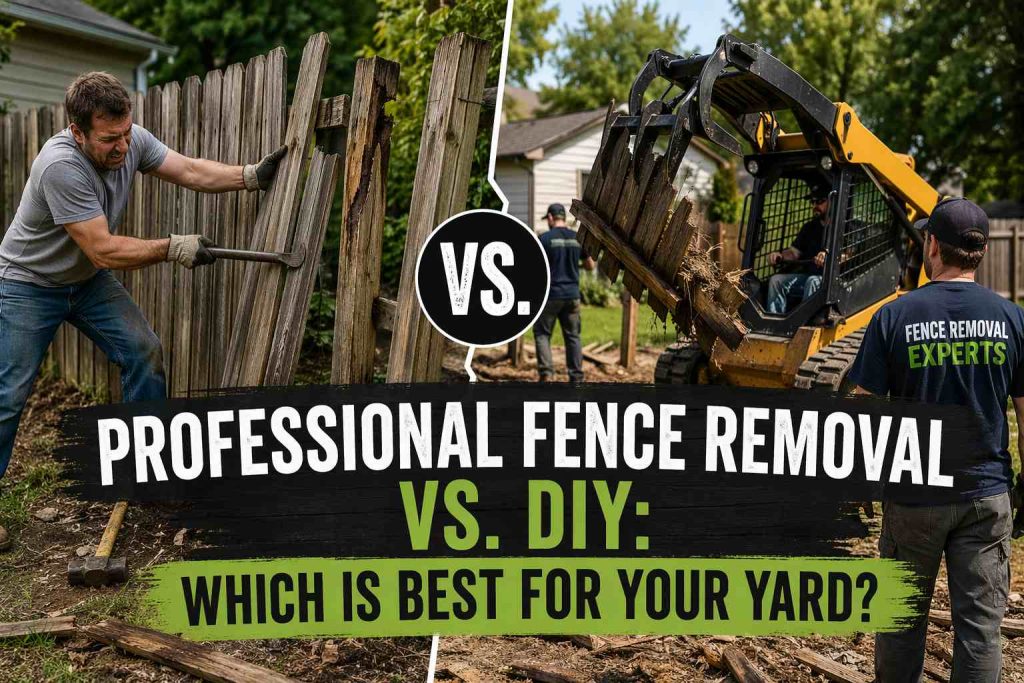
Picking the Best Way to Clear Your Land
When you look out at your backyard, a leaning or rotted fence can really spoil the view. Maybe you are planning to build a new outdoor living space or you just want to open up the area for your kids to play. Before the new project starts, the old structure has to go. This brings up a big question for most homeowners: should you grab a shovel and do it yourself, or is it better to pay for help?
Deciding between doing the work on your own and hiring professional Fence Removal depends on a few things. You have to think about your time, your physical strength, and how much money you want to spend. Both paths have pros and cons. In this guide, we will break down every part of the process so you can make a smart choice for your home and your wallet.
Why Fence Removal Is Harder Than It Looks
At first, taking down a fence seems like it would be easy. You might think it is just a matter of pulling out some nails and stacking wood. However, fences are built to stay upright against wind and storms. This means they are often anchored deep into the ground.
Many fences use concrete footings to keep the posts steady. These are heavy blocks of dried cement buried two or three feet deep. Pulling these out by hand is very hard work. If you leave them in the ground, they can get in the way of your new landscape design or future home additions. Also, you have to worry about what is hidden underground. Before you ever dig, you should always check with Call 811 to make sure you do not hit any gas or water lines.
The DIY Route: Saving Money with Hard Work
If you are in good shape and have a long weekend free, you might want to try the DIY path. This is a popular choice for people who want to lower their renovation costs. Here is what you need to know if you do it yourself.
Tools You Will Need
You cannot just use a standard hammer for this job. To do it right, you will likely need:
- A heavy-duty sledgehammer to break up concrete.
- A long pry bar to pull apart heavy boards.
- A reciprocating saw to cut through metal or thick wood.
- Work gloves and eye protection for site safety.
- A truck or a rented trailer to haul the junk away.
The Steps for Success
First, you have to take off the fence panels or the wire. Next, you have to tackle the posts. This is the hardest part. Many people try to wiggle them out, but if the wood is rotted, the post might just snap off at the ground level. This leaves the heavy concrete block stuck in the dirt. You will need to dig around the base and use a lot of leverage to pop it out. Finally, you have to find a place that takes old building materials. You cannot just put a whole fence in your regular trash can.
When to Call the Pros
While saving money is great, your time also has value. Hiring a crew for professional Fence Removal can save you days of back-breaking labor. A team that knows residential construction will have the right machines to get the job done fast. They can pull out dozens of posts in the time it takes a homeowner to do just one.
Cost Plus Construction for Carpentry can help ensure that the removal process is clean and organized. When experts do the work, they also take care of the disposal. You won’t have to worry about renting a dumpster or driving back and forth to a local landfill. They leave your yard smooth and ready for the next step, whether that is a new fence or a fresh layer of sod and turf.
The Hidden Risks of Doing It Yourself
There are a few “hidden” problems that can pop up during a DIY job. For example, if your fence is on a property line, you must be very careful not to damage your neighbor’s yard. If you accidentally pull up a neighbor’s shrub or crack their sidewalk, your “cheap” DIY project suddenly becomes very expensive.
Another issue is waste management. Many cities have strict rules about how you get rid of treated wood or metal. If you dump things in the wrong place, you could face a fine. Professionals already have accounts with local recycling centers and know exactly where the trash should go. This keeps your project in line with Environmental Protection Agency standards for handling construction debris.
Comparing the Costs
It is helpful to look at the numbers before you decide.
DIY Costs
- Tool Rental: If you don’t own a saw or a large pry bar, you might spend $50 to $100.
- Dumpster Rental: A small roll-off bin can cost between $300 and $500.
- Disposal Fees: Even if you use your own truck, landfills charge by the weight.
- Your Time: Think about how much your weekend is worth to you.
Professional Costs
When you hire a team, you get a flat quote. This usually covers the labor, the machines, and the dump fees. While the price might look higher on paper, you aren’t risking your back or your free time. It also prevents mistakes that might lead to more home repairs later on. Many homeowners find that the peace of mind is worth the extra cost.
Preparing Your Yard for New Projects
Once the old fence is gone, you have a blank slate. This is the perfect time to look at other parts of your property that might need work. Maybe you have an old shed that is falling down, or perhaps you are looking into garage demolition secrets to make room for a bigger driveway.
Taking down a fence is often just the first step in a larger property improvement plan. Having a clear space allows you to see the true shape of your land. You can check the foundation of your home or look for any drainage issues that the old fence was hiding.
Why Our Customers Trust Us
We take great pride in the work we do for our neighbors. Our goal is always to provide a service that is fast, friendly, and clean. We are very proud of the feedback we get from the community. You can see what others are saying by checking out our Google Business reviews. Reading these stories from local homeowners can give you a better idea of the high level of care we bring to every job site. We believe that a good reputation is built one yard at a time.
Safety First: Protecting Your Home
Whether you choose DIY or a pro, safety should be the top priority. Old fences often have rusty nails, splintered wood, or even stinging insects like wasps hiding inside the posts.
- Protective Gear: Always wear thick boots and heavy gloves.
- Lifting: Never try to lift a concrete footing alone. They can weigh over 100 pounds.
- Children and Pets: Keep them away from the work zone until every single nail is picked up.
Cost Plus Construction for Carpentry understands these risks and keeps a very tidy workspace. We use magnets to find dropped nails and make sure the ground is safe for your family to walk on the moment we leave.
Simple Ways to Pay for Your Project
Sometimes, a big yard cleanup or a new fence project comes up when you aren’t quite ready for the bill. We want to make it easy for you to get the home you want without the stress of a huge upfront payment. To help our clients, we offer different financing options. This allows you to break the cost of your home renovation into smaller, monthly chunks. This way, you can get that old fence removed now and pay for it over time in a way that fits your budget.
Better Results for Your Home
Choosing between professional help and doing it yourself is all about what matters most to you. If you have the tools and love a physical challenge, DIY can be a fun way to spend a weekend. But if you want the job done quickly, safely, and without any leftover mess, hiring a crew is the way to go. A clean yard is the best foundation for a beautiful home.
If you are ready to start your next project and want to skip the heavy lifting, we are here to help. Our team can handle the tough stuff so you can focus on the fun parts of decorating your yard.
Ready to clear out the old and bring in the new? For dependable help with your property, give us a call. You can reach our office at (713) 530-1610. We look forward to helping you make your yard look its very best!