
Smart Ways to Save Your Home
Maintaining a house is much like taking care of your body. If you ignore a small ache, it might turn into a major surgery later on. In the world of housing, a tiny leak or a small crack can lead to a massive bill if you wait too long to fix it. This is why small upgrades are so important. They act as a shield for your property. By spending a little bit of money and time now, you can keep your living space safe and beautiful for many years.
Many people worry that any kind of work on their house will be too expensive. However, you can use cost plus remodeling to keep things affordable. This method helps you see exactly where your money goes. It is a very clear and honest way to handle residential construction projects. Whether you are looking at your roofing or your plumbing, being proactive is always the best choice for your wallet.
Why Small Changes Matter
It is easy to look past a loose shingle or a flickering light. We often think we will get to it next month. But homes are complex systems where everything is connected. For example, a small gap in your siding can let in moisture. That moisture can cause mold growth inside your walls. Before you know it, a simple fix has turned into a giant home renovation project that costs thousands of dollars.
To keep your home in top shape, you should focus on preventative maintenance. This means looking for small issues before they get big. When you take care of the little things, you protect the structural integrity of your building. This not only keeps you safe but also helps maintain your property value. If you ever decide to sell, a well-kept home will always fetch a higher price on the market.
Essential Exterior Upgrades
The outside of your home is your first line of defense against the weather. Rain, wind, and sun can all cause damage over time. Here are some small exterior upgrades that make a big difference:
- Clean and Repair Gutters: When gutters are full of leaves, water cannot flow away from your house. This can lead to foundation repair needs because water pools at the base of your home.
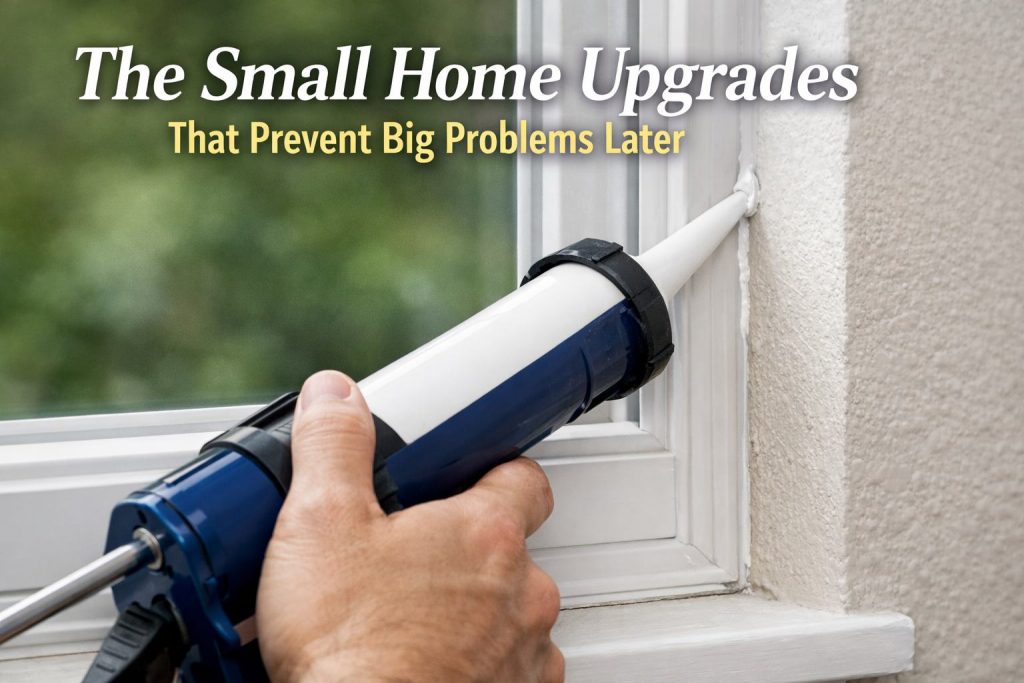
- Check the Sealant: Look at the caulking around your windows and doors. If it is peeling, cold air and water can get inside. Adding new sealant is cheap and keeps your insulation working well.
- Trim Tree Branches: Heavy branches hanging over your roof can fall during a storm. Trimming them back protects your shingles and prevents holes in your roof.
By focusing on these areas, you ensure that your building envelope stays tight. This also helps with your energy bills. When your home is sealed correctly, your heater and air conditioner do not have to work as hard. According to the U.S. Department of Energy, sealing air leaks is one of the quickest ways to save money.
Protecting Your Interior Systems
Inside the house, there are several systems that need your attention. Your HVAC system is a great example. If you change your air filters every month, the system runs smoothly. If you forget, the motor has to work harder and might burn out. Replacing a motor is much more expensive than buying a simple filter.
You should also look at your flooring. If you have hardwood, a small scratch might not seem like a big deal. But if water gets into that scratch, the wood can warp. Using a good sealant or a rug in high-traffic areas can save your floors. If you find that the damage is already too much, you might want to consider the cost plus remodeling to update your space without overspending.
Safety Upgrades for Peace of Mind
Safety is the most important part of being a homeowner. Some small upgrades are not just about saving money; they are about saving lives. You should regularly check your smoke detectors and carbon monoxide alarms. These are simple devices, but they are vital.
Additionally, you should inspect your electrical wiring. Old wires can become brittle and start fires. If you see a spark or smell something burning, you need to act fast. While some jobs are easy to do yourself, others are not. For example, you should learn about 5 dangerous home repairs to make sure you stay safe while improving your house.
Kitchen and Bathroom Small Fixes
The kitchen and the bathroom are the two most used rooms in any home. They are also the places where water damage is most likely to happen. A dripping faucet might seem like a small annoyance, but it wastes gallons of water. More importantly, it can damage your cabinets and countertops.
- Regrout Tiles: Over time, the grout between your tiles can wear away. This allows water to seep behind the walls. Regrouting is an easy weekend project that prevents water damage.
- Update Lighting: Old light fixtures can use a lot of power and get very hot. Switching to LED bulbs is a fast home improvement that saves energy and brightens up your space.
- Check Under Sinks: Make it a habit to look under your sinks once a month. If you see even a tiny damp spot, fix the pipe or the seal immediately.
When these rooms are in good condition, your daily life is much better. It feels good to cook in a clean kitchen and relax in a functional bathroom. Small updates here also add a lot of curb appeal and value if you ever list your home.
The Value of Professional Help
Sometimes, a project is a bit too big for a DIY weekend. That is when you need a trusted general contractor. A professional can spot problems that you might miss. They have the right tools and the building permits knowledge to get the job done correctly.
We take great pride in our work and the relationships we build with our clients. Our team works hard to ensure every project is done with care. You can see what our happy customers have to say by checking out our GMB trusted reviews. We are very proud of the feedback we receive, as it shows our dedication to quality and honesty in every drywall or carpentry task we finish.
Planning Your Budget
When you plan for upgrades, it helps to have a clear budget. You should set aside a small amount of money each month for home maintenance. This way, when a pipe leaks or a window breaks, you are not stressed about the cost. Using a fixed-price contract or an open budget system can help you stay on track.
It is also helpful to look at resources from the Better Business Bureau to find companies that have a good reputation. Working with honest people ensures that your renovation goes smoothly and that you get the best value for your hard-earned money.
Frequently Asked Questions
How do I know which upgrade to do first? Always start with repairs that protect the structure of the home. This includes the roof, the foundation, and any water leaks. Once the house is dry and solid, you can move on to cosmetic changes like paint or new lights.
Are small upgrades really worth the effort? Yes, they are. Small upgrades prevent “deferred maintenance.” This is a term used when a lot of small problems pile up. If you let this happen, the cost to fix everything at once can be overwhelming.
Can I do these upgrades myself? Many small tasks like painting, changing filters, and caulking are perfect for DIY. However, for anything involving electricity, heavy plumbing, or structural walls, it is always safer to call a professional.
Keeping Your Home Happy and Healthy
Taking care of your home does not have to be a scary or expensive task. By focusing on small, smart upgrades, you can prevent the big problems that cause stress and high costs later on. Remember to keep an eye on your ventilation, check your plumbing fixtures, and never ignore a small leak.
A happy home is a well-maintained home. Whether you are doing a small fix or a larger modernization project, the goal is to create a safe space for you and your family. If you ever feel stuck or need professional advice on your next project, our team is always here to help you navigate the process.
For expert guidance and reliable service, please reach out to our office. You can call our hotline office at (713) 530-1610 to discuss your home needs today.