
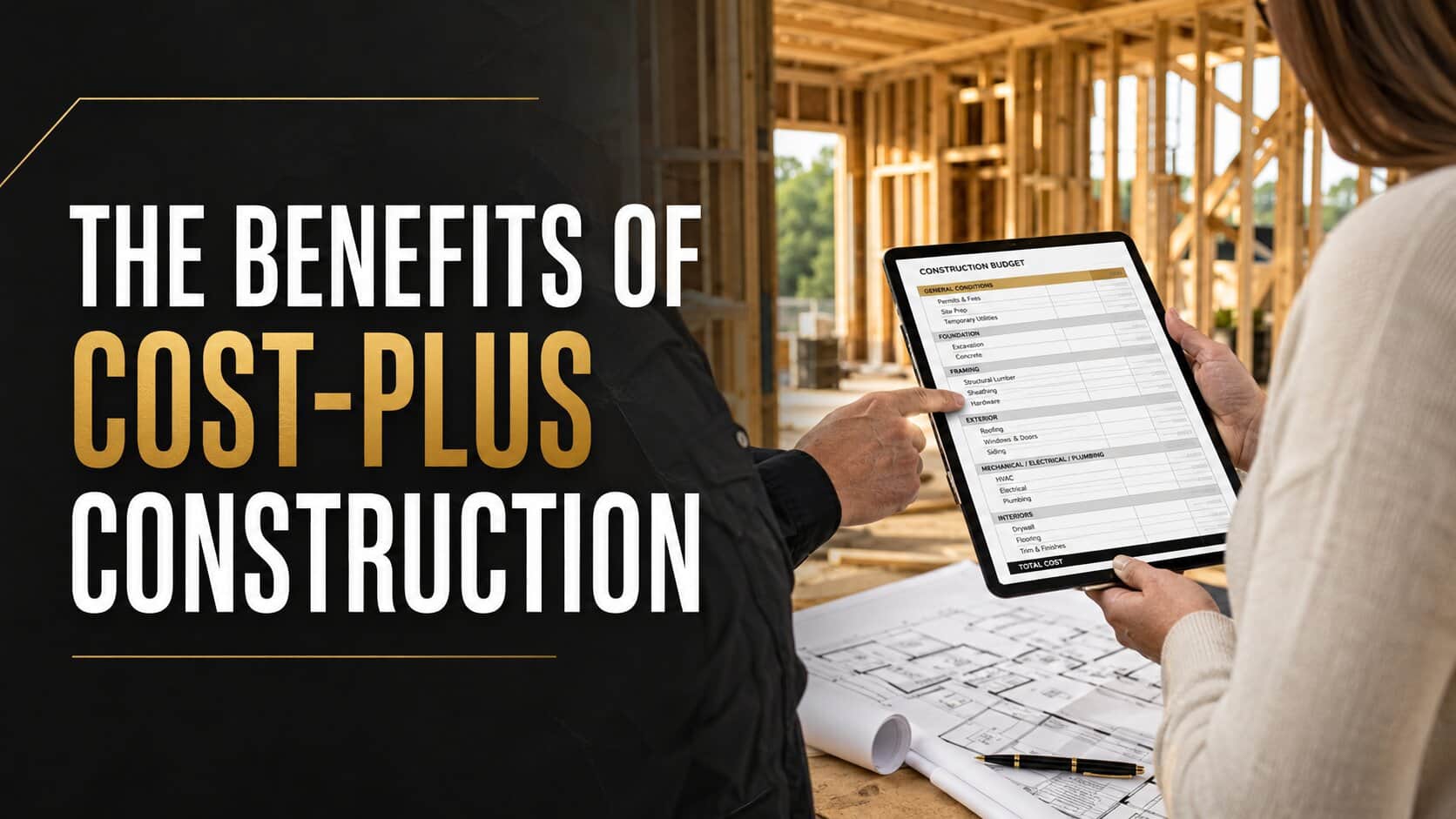
The Benefits of the Cost-Plus Construction Model When Working With a Reputable Contractor
Discover how open-book pricing provides greater transparency, helps prevent price gouging, and allows construction savings to remain with the customer.
Choosing the right contractor is one of the most important decisions you will make when planning a construction or renovation project. However, the type of construction agreement you choose can be just as important.
One option that provides customers with greater visibility and control is the cost-plus construction model.
Under a cost-plus agreement, the customer pays the actual cost of labor, materials, subcontractors, permits, and other project expenses. The contractor then receives an agreed-upon fee or percentage for managing and completing the project.
When paired with a reputable contractor who provides accurate records, clear communication, and responsible project management, this model can offer significant advantages over a traditional fixed-price contract.
Greater Transparency Throughout the Project
Transparency is one of the biggest benefits of cost-plus construction.
With a traditional fixed-price agreement, the customer is typically presented with one total price. That price may include allowances, contingencies, estimated costs, and contractor profit, but the customer may not know exactly how each dollar is being spent.
A properly managed cost-plus project is different.
The customer can receive detailed documentation showing expenses such as:
- Labor charges
- Material purchases
- Subcontractor invoices
- Equipment rentals
- Permit and inspection fees
- Delivery charges
- Other project-related costs
This open-book approach gives the customer a clearer understanding of where the project budget is going. It also creates accountability because the contractor must support project expenses with invoices, receipts, purchase orders, and other documentation.
At Cost Plus Construction, we believe customers should be able to see what they are paying for and understand how their money is being used.
Protection Against Inflated Pricing
Fixed-price contractors must account for risk when preparing a proposal. Material costs may increase, hidden conditions may be discovered, or portions of the work may take longer than expected.
To protect themselves, contractors often include contingencies and additional padding in their price.
If those additional funds are not needed, the contractor may retain the difference as additional profit.
A cost-plus model helps reduce that concern because the contractor’s compensation is established in advance. The customer pays the documented cost of the work plus the agreed-upon contractor fee.
This structure can reduce the incentive to inflate prices or add unnecessary padding to the original estimate. The contractor can focus on making good construction decisions instead of trying to protect a lump-sum profit margin.
However, this benefit depends heavily on the contractor’s integrity. Customers should work with a contractor who uses transparent billing practices and is willing to provide supporting documentation for project expenses.
Project Savings Stay With the Customer
One of the most valuable benefits of cost-plus construction is that savings generally remain with the customer.
Suppose a contractor estimates that a portion of the project will cost $25,000, but careful purchasing and efficient project management reduce the actual cost to $21,000.
Under many fixed-price agreements, the contractor may retain the $4,000 difference. Under a cost-plus agreement, the customer pays the actual documented cost, meaning the savings remain in the customer’s budget.
Savings may be created through:
- Competitive subcontractor bids
- Contractor pricing from suppliers
- More affordable material selections
- Efficient scheduling
- Reduced waste
- Avoiding unnecessary work
- Discovering more economical construction solutions
A reputable cost-plus contractor should look for opportunities to reduce costs without sacrificing safety, workmanship, or the overall quality of the project.
Greater Flexibility When Plans Change
Construction projects often evolve after work begins. A customer may upgrade certain finishes, modify a layout, add work to the original scope, or respond to an unexpected condition discovered during demolition.
Under a fixed-price contract, these decisions commonly require formal change orders. Depending on the contractor and agreement, change orders may include additional markups or administrative charges.
The cost-plus model can make these adjustments more straightforward. The customer pays the actual cost of the revised work plus the previously agreed-upon contractor fee.
Changes should still be documented and approved, but the pricing process is generally easier to understand because the same transparent fee structure continues to apply.
Better Decisions Based on Actual Costs
Cost-plus construction gives customers the ability to make informed decisions as the project progresses.
If one phase costs less than expected, the customer may decide to use those savings for an upgrade elsewhere. If an unexpected expense occurs, the customer can review the actual cost and adjust other selections to help maintain the overall budget.
This ongoing visibility makes it easier to prioritize spending and respond to changing project conditions.
The contractor and customer are also more closely aligned. Both parties can evaluate the same cost information and work together to determine the best solution for the project.
Why the Contractor Matters
The cost-plus model is only as effective as the contractor managing it.
Because the customer pays the actual project costs, the contractor must have reliable systems for scheduling, purchasing, supervision, billing, and recordkeeping. A poorly managed project can experience delays and unnecessary expenses regardless of the contract structure.
Before selecting a cost-plus contractor, customers should ask:
- How often will we receive invoices or billing updates?
- Will receipts and subcontractor invoices be provided?
- How is the contractor’s fee calculated?
- How are changes approved and documented?
- How does the contractor track the project budget?
- How often will we receive progress updates?
- What controls are used to prevent waste and unnecessary expenses?
A reputable contractor should be able to answer these questions clearly and explain exactly how the project will be managed.
Is Cost-Plus Construction Right for Your Project?
Cost-plus construction can be an excellent choice for renovations, custom homes, commercial improvements, and projects where the entire scope cannot be determined before work begins.
When handled by a reputable contractor, the model can provide:
- Open-book pricing
- Greater cost transparency
- Reduced pricing padding
- More flexibility
- Better-informed decisions
- Savings that remain with the customer
- A more collaborative relationship with the contractor
At Cost Plus Construction, our goal is to give customers a clear understanding of their project costs while providing the professional management required to keep the work moving forward.
If you are considering a construction or renovation project in the Houston area, contact Cost Plus Construction to discuss your project and learn whether the cost-plus model is the right fit for you.