
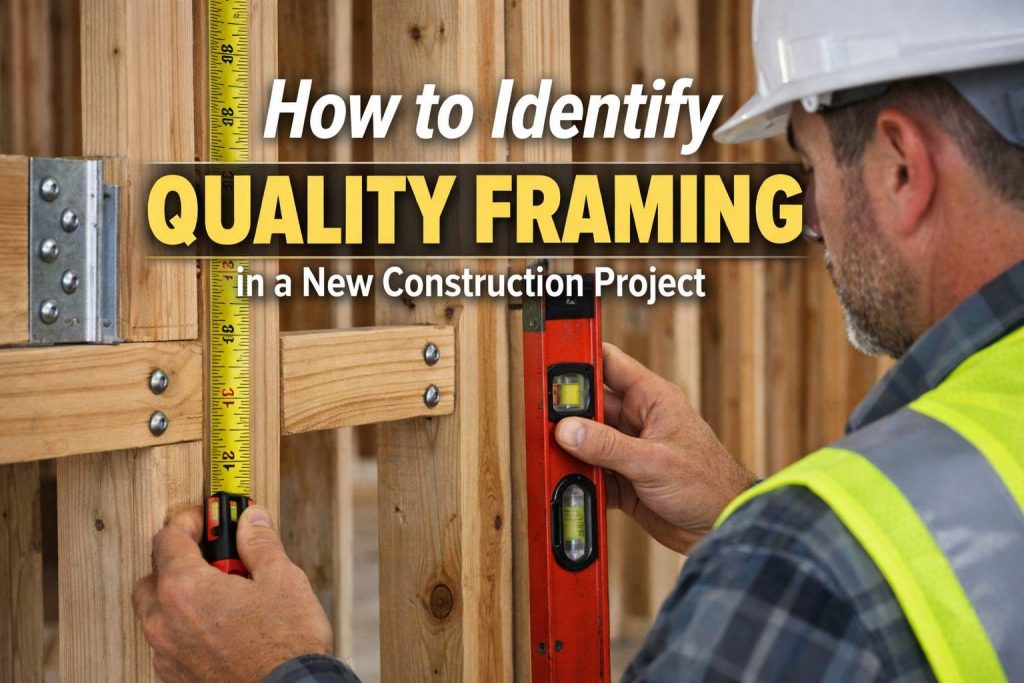
Building a Strong Foundation
When it comes to new home construction, one of the most important elements often overlooked is the framing. The structural integrity of your home starts with quality framing, which sets the stage for everything from roof installation to drywall. Whether you’re building your dream home or managing a renovation, knowing how to spot well-constructed framing ensures safety, durability, and long-term satisfaction.
Understanding the basics of wood framing or metal framing can help homeowners make better decisions, avoid costly mistakes, and communicate effectively with contractors.
Key Signs of Quality Framing
Not all framing is created equal. A professional crew following industry best practices delivers precision, stability, and alignment. Here’s what to look for:
- Straight and even studs: Walls should be perfectly vertical, with no bowing or twisting.
- Proper spacing: Studs are typically 16” or 24” on center. Incorrect spacing can compromise load-bearing capacity.
- Solid connections: Joists, beams, and headers should be securely fastened using nails, screws, or connectors rated for structural use.
- Quality materials: Look for dry, treated lumber or high-grade steel that resists warping, rotting, or corrosion.
- Consistent level and plumb: Check that floors, walls, and ceilings are level. Misaligned framing can lead to doors and windows that don’t fit correctly.
These details may seem small, but they form the backbone of a strong, long-lasting home.
Common Framing Mistakes to Avoid
Even experienced builders can make errors. Recognizing potential issues early can save both time and money:
- Using low-quality lumber or recycled materials prone to defects.
- Poorly secured headers over windows and doors, leading to sagging over time.
- Uneven floor joists, causing squeaky floors or uneven surfaces.
- Ignoring local building codes and inspection standards, which are essential for safety and insurance compliance (HUD Building Codes)
Awareness of these mistakes helps homeowners ask the right questions and ensure contractors follow proper procedures.
Materials and Methods
Quality framing depends on the right materials and techniques:
- Wood framing: Most common in residential construction; should be treated for moisture and pests.
- Steel framing: Resistant to termites, fire, and warping; often used in commercial or high-end residential projects.
- Engineered lumber: Includes LVL beams and I-joists, offering consistent strength with reduced weight.
Professional builders often use a mix of materials to balance cost efficiency and structural reliability.
Benefits of Professional Framing Solutions
Hiring experts ensures that the framing is not only strong but also optimized for other home systems. With professional solutions, you get:
- Improved energy efficiency: Properly framed walls allow for better insulation installation.
- Safer structural integrity: Reduces the risk of future settling or structural failures.
- Time and cost savings: Avoids delays caused by corrections and rework.
For homeowners weighing construction options, learning the difference between renovation vs. new construction can help decide the best path for your project.
How to Spot Experienced Framing Contractors
Finding a reliable team is crucial. Indicators of quality include:
- Verified reviews and local reputation: Check Google Business for trusted reviews – many clients praise the reliability and transparency of our projects (see reviews).
- Proper licensing and insurance: Protects you from liability in case of accidents or mistakes.
- Clear communication: Professionals will explain the framing plan, materials, and expected timeline.
Using cost plus construction framing solutions ensures that every aspect of the job meets these high standards.
Framing Checklist for Homeowners
A simple checklist helps track quality during inspections:
- Walls are plumb and level
- Stud spacing matches design specifications
- Headers installed correctly over openings
- Joists are properly supported
- No visible cracks, splits, or warping in lumber
- All fasteners are secure and appropriate for the material
Keeping this checklist handy during walk-throughs ensures peace of mind and confidence in your new construction project.
Financing Options for Framing Projects
Investing in quality framing is critical, but financing may be necessary for some homeowners. Various programs allow for manageable payments without compromising on materials or labor:
- Flexible construction loans for new builds
- Home improvement financing options
- Customized payment plans with transparent terms
You can explore options further to find the plan that fits your budget while still prioritizing structural quality (learn more about financing).
Conclusion: Building With Confidence
Quality framing is the backbone of a safe, durable, and comfortable home. By understanding what to look for – from materials to construction techniques – homeowners can ensure every project meets high standards.
Invest in professional solutions, check reviews, and use reliable financing if needed. For any questions or immediate assistance, our office is ready to help: (713) 530-1610.
With the right approach, your new construction project will stand strong for decades, providing peace of mind and lasting value.